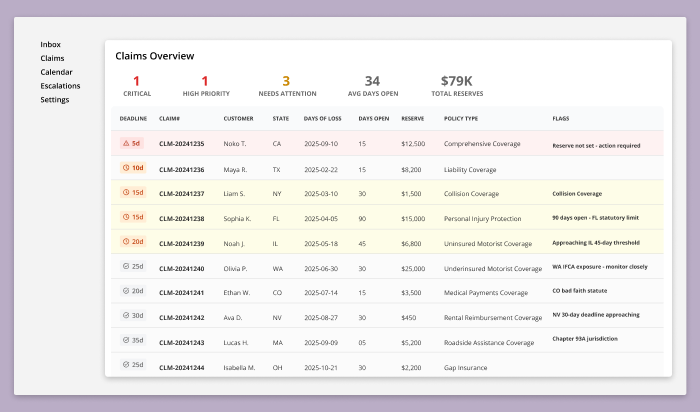
Agentic AI Insurance Claims
Designing the trust layer for AI-driven decisions
Where Trust Breaks (The Problem)
Insurance claims are slow and fragmented. AI improves speed but it also creates a trust gap. Decisions are made instantly but users are left without context, reasoning or control.
Drivers don’t understand decisions
Adjusters don’t trust AI outputs
Outcome: Decisions happen faster than humans can verify them

What Needed to Change (The Goal)
The goal wasn’t automation, it was making AI decisions understandable, accountable, and usable by humans. Design a claims experience that:
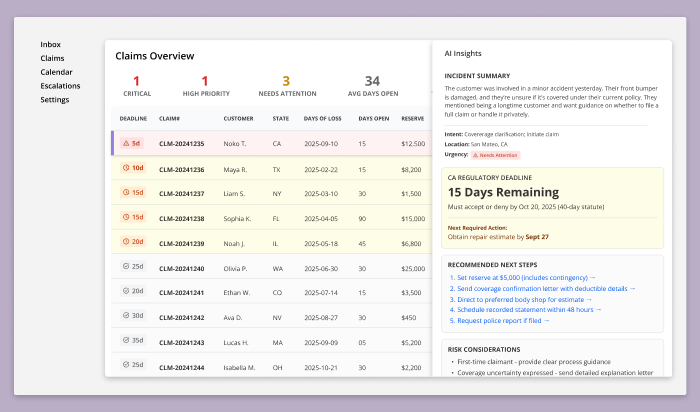
makes AI decisions transparent
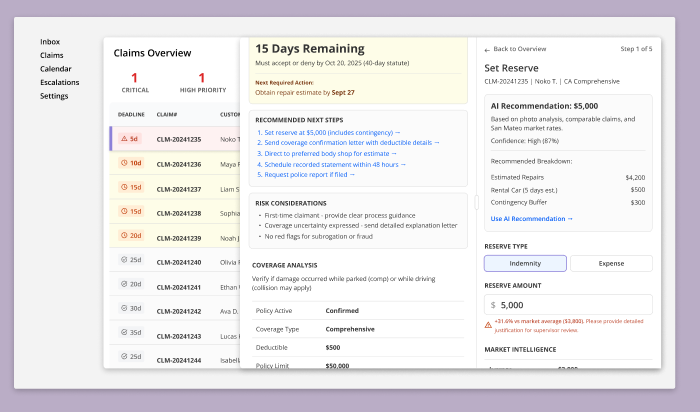
keeps adjusters in control
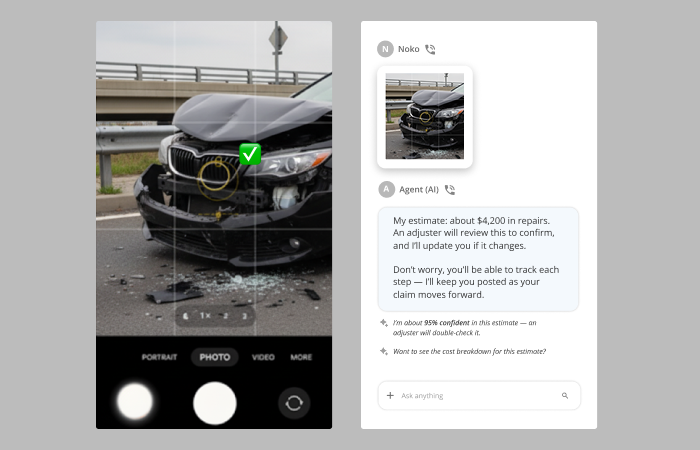
reduces uncertainty for drivers
System Design Moves (What I did)
Exposed the “black box” failure in AI decision-making
Separated driver and adjuster workflows because their trust requirements and decision responsibilities were fundamentally different:
drivers needed reassurance and visibility
adjusters needed auditability, override capability, and operational speed
Turned AI outputs into explainable, editable decisions instead of presenting them as final answers
surfaced reasoning and confidence signals inline
created override paths for adjusters
framed AI recommendations as collaborative inputs, not automated conclusions
Balanced transparency with operational usability
too little reasoning reduced trust
too much detail increased cognitive load and slowed decision-making
optimized for inspectability, not full model transparency
Design Trade-Offs:
expose enough AI reasoning to build trust without overwhelming adjusters with model-level complexity
more transparency increased confidence but too much detail slowed decision-making and added cognitive load
make AI reasoning inspectable, not exhaustive
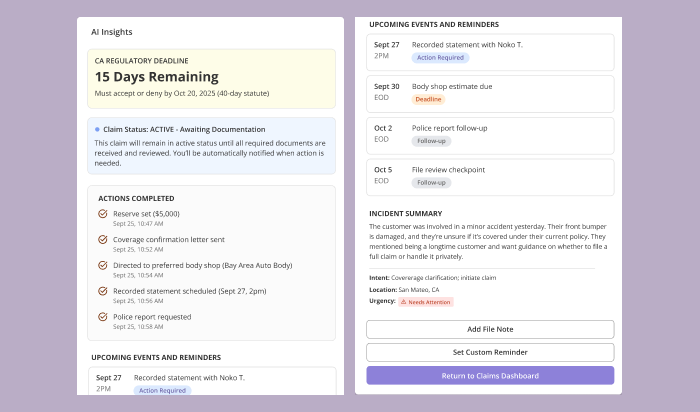
Reframed prioritization around regulatory deadlines, not model confidence
the system originally prioritized based on AI confidence scores
operationally, claims urgency was driven more by regulatory deadlines, legal exposure, and customer escalation risk than model certainty alone
Defined trust operationally through:
override frequency
adjuster acceptance behavior
claim escalation patterns
confidence visibility
and time-to-verification.
Outcome: The system was designed not just to improve AI usability, but to reduce verification friction, support regulatory compliance, and increase operational confidence in AI-assisted claims handling.

What Changed (The Impact)
1. Increased trust in AI decisions by exposing reasoning and confidence
2. Reduced adjuster cognitive load by replacing fragmented tools with a unified system
3. Improved decision clarity by turning AI outputs into explainable, editable inputs
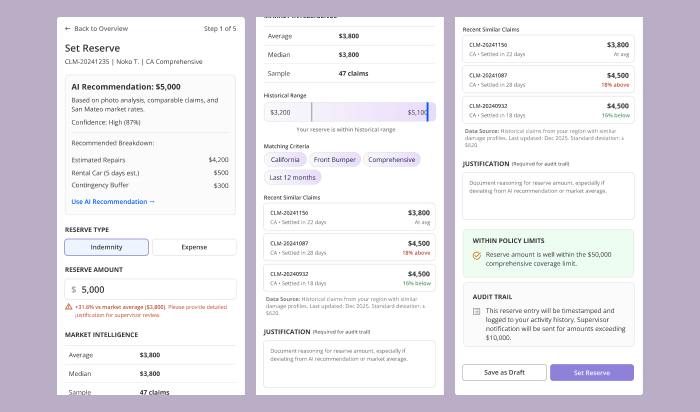
4. Created a human ↔ AI feedback loop through override and audit mechanisms.
Key Insight
AI doesn’t fail when predictions are imperfect but fails when humans lose the ability to inspect, challenge, and confidently act on its decisions.
Designing for explainability, overrideability, and operational visibility turns AI from a black box into a usable decision system.